The Early Years
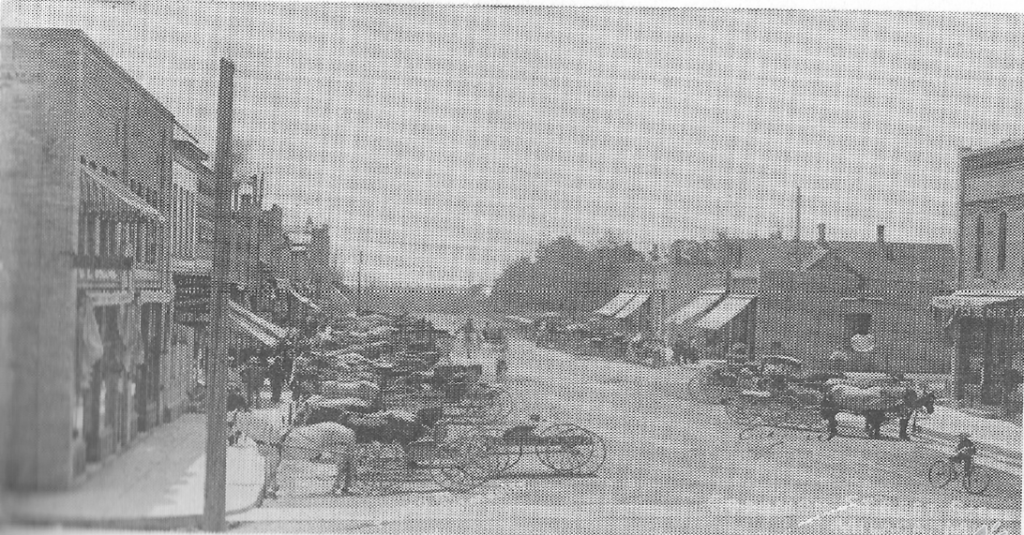
The land surrounding Milaca (Great White Father) in the late 1890’s to early 1900’s was mainly covered with White Pine trees, which brought lumber companies to the area who purchased much of the land. As railroads were also being established during this time, they also purchased the land. Our country was in a depression during this time but people persevered and slowly the area was settled, mainly by the timber industry. Milaca township was established in 1889 as were other townships between 1859-1922. The railroad line built between Hinckley and St. Cloud was detrimental in establishing the community of Milaca. This spot was where the railroad line first crossed the Rum River and where a sawmill was built. The railroad shipped farm goods and lumber as well as carrying passengers. Many immigrants came (some in large groups) to begin a new life in the area, setting up businesses as well as farming the land as the timber was depleted. The first church in Milaca was the United Methodist Church. Other churches were also built during this period, Scandinavians built the Evangelical Free Church, as others built the Christian & Missionary Alliance, First Baptist and First Congregational Churches. There was also a Norwegian Lutheran Church.

The German Lutherans
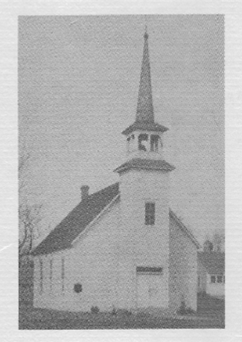
In 1914 Frank Dranselka was instrumental in finding families of the German heritage who wished to establish their own church in the Milaca area. He and Rev. Martin Hauser of Foley, MN called on many families, using a wagon and team of horses to get around. Cars were just beginning to be seen in the area at this time. St. Paul’s Lutheran Church was organized! Some current members of St. Paul’s and some families in our area now, have relatives who were members of St. Paul’s Lutheran Church back then. They began services in 1915, held in the Norwegian Lutheran Church on every other Sunday in the afternoon, during the spring and summer of that year and some in the members’ homes. Rev. Edward Nauss was installed as Pastor in August, after graduating from the seminary. He lived with a member of the Norwegian Lutheran Church. He purchased a horse and buggy to make calls to the families. By Christmas a confirmation class was being held. In 1916 an adult confirmation class was confirmed. In Jan.1917, St. Paul’s bought the Norwegian Lutheran Church building for $950.00. We will now call this church the “Little White Church”. The first Baptisms were twin boys of M/M Otto Engelke. In 1918 Rev, Nauss also began holding services in the Greenbush schoolhouse on Sunday afternoons, as a church was organized there. In June of 1920 Rev. Nauss married and brought home his bride, Ethel, of St. Paul, MN. It wasn’t long and a Ladies Aid was organized in both congregations, meeting in members’ homes on Sunday afternoons.
1920s-1950s
Christmas Eve, 1920 saw the first Children’s Christmas Service. In Nov. 1922 Rev. Edward Nauss took a call and left for Rosselle, Ilinois. By Christmas, Rev. E.A. Storm came from Isle every other Sunday. He moved to Milaca in 1923 and served St. Paul’s in Milaca on Sunday morning and the Greenbush church in the afternoon. He accepted a call to Rensselaer, Indiana and left the beginning of 1925. Rev. H.E. Sieving was installed as Pastor in September, 1929, after graduating from the Seminary. He also served churches in Ogilvie and Braham. One of the young persons confirmed in 1930 was Vern Koch, father of present members, Janet, Joyce and Jean. In the cold weather, Rev. Sieving and some members brought along wood to start the fire in the wood stove before the church services. The church records were kept by Rev. Sieving in his home in Ogilvie. In 1939 his home was destroyed by fire and the church records were destroyed as well. During this period the organists were paid $1.00 a month and Pastor’s salary was $360.00 a year!
A past member, Mildred VanSickle remembered back to young childhood that her parents, August & Elizabeth Koch (brother of Vern Koch), attended church every Sunday and that her father helped keep the wood stove going. Her mother played the organ for the church services. She recalled that the men sat on one side of the church and the women on the other, except for her mother since the organ was on the mens’ side, which was the north side. The services were conducted in the German language and rotated Sundays with two different German dialects, one her mother understood and the other her father understood. Her parents grew up in different regions in Iowa where the dialects were different and only German was spoken in the homes. Mildred didn’t understand either German so her father taught her her religious instruction at home.
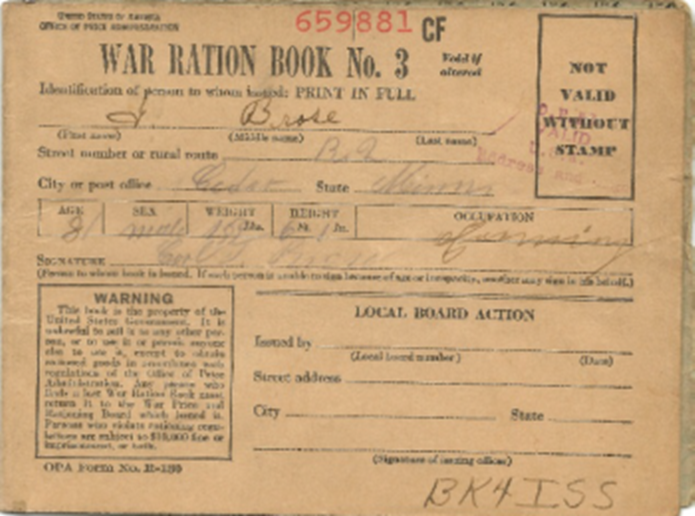
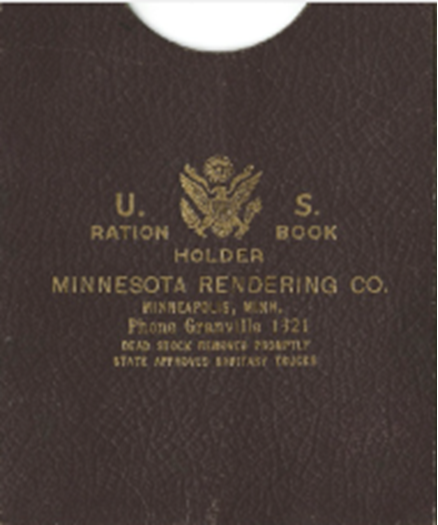
After the attack on Pearl Harbor, during WWII, rationing of many items, especially with rubber and gasoline began. Ministers were allowed special rations, marked with an “X” to allow extra supplies for them, as well as the police, etc. In July of 1943 the members agreed to have an Annual Mission Festival, held in Ogilvie, because of the tire and gas rationing.
Discussion by members in July, 1946 resulted in making an application to become a part of the Missouri Synod. In Nov. 1946 members held a special meeting to do a free will offering to help Pastor buy a car. Mary Ida Cornelius was the organist at this time and since it was so hard to pump, Rev. Sieving hooked up a vacuum cleaner that worked the bellows, which worked well but there was no way to control the volume. Later an electric organ was purchased. An adult class was confirmed, including present member, Jeanette Phillips, as well as Leonard Paulson and June Koch. In January of 1949 Rev. Sieving accepted a call to Hawarden, Iowa. Rev. O. Dorn from the Crown church served as vacancy pastor for a short time.
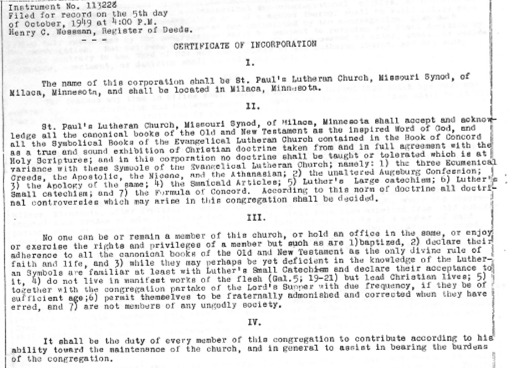
On October 5, 1949 the St. Paul’s Lutheran Church joined th Missouri Synod.
1950's-1970's
In 1950 Rev. Edmund Bentrup came to St. Paul’s, after serving in Washington state and Annandale, MN. He was born in Hankow, China where his father was a missionary. He served both Milaca and Ogilvie churches. He also would bring kindling and paper from home to start the wood stove before meetings and confirmation classes. An oil burner replaced the wood stove later.
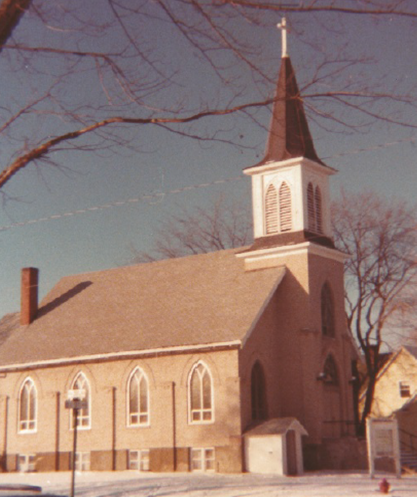
Members Lloyd & Janice Hoag gave a new altar, pulpit, Baptismal font and pastor chair, as a memorial to their son, Dick, who at the age of 19 drowned in the Rum River with two of his friends. Members decided to put a basement under the “Little White Church” and the basement was dug out by member Carl Puckett (father of Joel, Lanaya Totzke, Darlene Bemis) who used his little Ford tractor. Much digging and re-filling and digging again was needed to get the job done. In this colored picture you see the new basement section.
A shoebox was placed by the church door for collections for a new oil “furnace” and an application was sent in to get ration stamps for the fuel oil. By 1956 Rev. Bentrup had left and Rev. Vernon Koeper came after serving as a missionary in Africa. He also served Zion Lutheran of Princeton and in 1957 accepted a call to a church in St. Paul. Pastor O. Dorn was a vacancy pastor for a short time again until Rev. Marvin Blaske came as St. Paul’s Pastor, on May 5, 1957, serving both Zion Lutheran of Princeton and St. Paul’s of Milaca. In
Aug. 1957 the first wedding by Pastor Blaske was to marry present members, Harry & Lanaya Totzke.
With the new basement completed, the Ladies Aid began planning for the first
Stew Supper. Meat purchased then for the stew was about $26. Due to lack of refrigeration, some of the stew which was made the day before the supper, was cooled in a bathtub of water. Unfortunately it turned sour so the next day more supplies were bought and prepared and the event was a success, earning $156.25. In Jan. 1959 St. Paul’s had 153 baptized members and 98 communicant members.
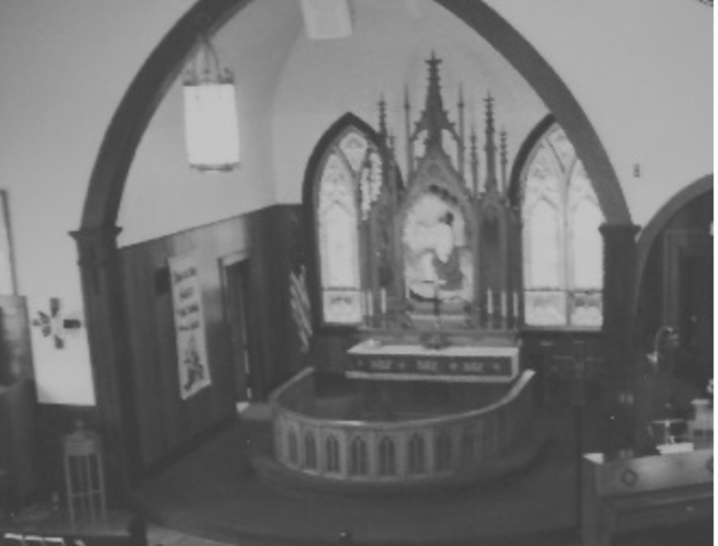
In January 1961 at a voter’s meeting, discussion was held to purchase a different church building or to add on a Sunday School wing to the present “Little White Church”. A special meeting was held and decision to contact the Trinity Lutheran Church to make an offer for their building. Plans continued on a Sunday School wing for the Little White Church. In Nov 1963 voter’s decided to offer $10,000 to Trinity (who were asking $12,000), with $1,000 down. Pledge cards would be given to the members to help raise the money. The contract was signed in July, 1964. The “Little White Church” was sold later for $4,000 (purchase price had been $950 in 1917). The congregation walked from the old church to the new church, just a block and a half away, led by Pastor Mennicks of the MN North District, singing “Onward Christian Soldiers”. This new church building had beautiful stained glass windows and a balcony over looking the pews below. The tall altar had words in Norwegian saying “Not My Will But Thine Be Done”. In Feb. 1964 the Ladies’ Aid organized the Sunshine Circle which held Bible studies together in various members’ homes. They started projects such as Baptism hankies, collecting stamps for missions and making quilts for World Relief. They had the Norwegian saying on the altar changed to English also, and they organized the confirmation pictures to be displayed on the wall. The current picture of Jesus in Gethsemane in the altar was given by Alden & Darlene Bemis in memory of their daughter, Linda, who passed away at only 3 months old. A choir was organized and led Donna Shave with Joline Koch being accompanist. A Junior choir was also started at a later time. Confirmed youth started a Walther League and the 6-8th graders had a junior Walther League.


In the New Church
In 1970 the basement tile was installed on the outside at a cost of $568. Church officers in 1971 were: Pres. Russ Hill, VP Merle Hasz, Sec. Richard Becker, Treas. Merle Peterson and Fin Sec. Robert Weikert. There were 3 elders – Alden Bemis, Larry Cornelius and Leonard Paulson. the three trustees were Don Wirz, Carl Puckett and Vern Koch. There was a Men’s Club with Don Lemke as pres and sec/treas. Was Dick Gustafson. The Ladies’ Aid (affiliated with the LWML in 1982) had Betsy Hill as pres., VP June Koch, Sec. Betty Nystrom and Treas. Bobby Becker. The Sunshine Circle was led by Pres. Janice Hoag, VP Ellen Gilder and Sec/Treas. Jeanette Phillips. The young adults in the Walther League had Tom Phillips for pres., VP – Scott Buss, Jane Gustafson (now Marquardsen) as Sec., and Nancy Maurer (Roeschlein) as Treas. The Jr. Walther League for grades 6-8 had leaders Pres. Sheila Harris, Sec, Daryl Harmdierks, Treas. Jean Koch (Larsen) and advisors M/M Warren Noetelmann. Sunday School Supt. was Betty Nystrom. The 1972 Annual Report had our membership as: 240 Baptized members, 173 Communicants, 57 enrolled in Sunday School and 10 in the Nursery roll. The Financial Secretary listed total receipts of $974.86. (Total receipts in 2013 were $164,929.21!) Total expenses then were $12,032.50 (in 2013 total expenses were $183,033.59).
In 1974 some remodeling was done in the basement with paneling being put on the walls.
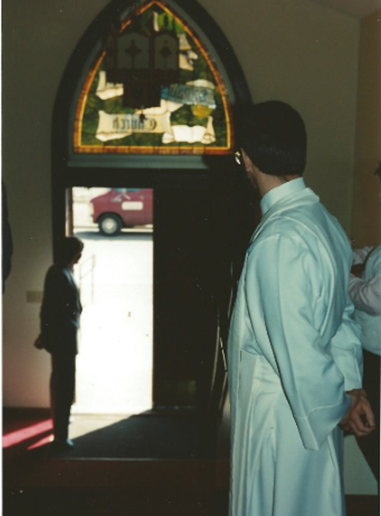
In 1975 more remodeling was done as well as re-leading of the stained glass windows and a protective storm placed over them.
Carpet was installed and total expense of remodeling was $35,338.
A member of the church, Wes Phillips was barber in Milaca during this era, with a picture found in the Milaca Centennial book.
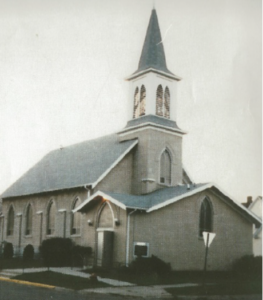
In 1982 the new addition was built on the east end of the church to make a bigger entrance area, stairs up and down, bathrooms and office and nursery rooms at a cost of $58,719.
1970's-1990's
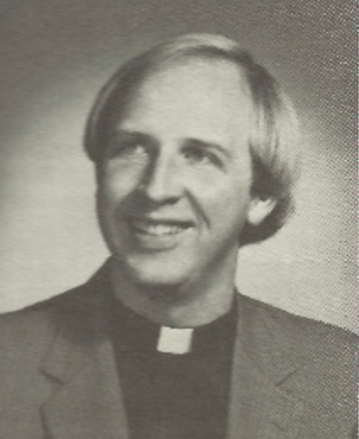
In 1984 the congregation voted to call for their own pastor, allowing Pastor Blaske to serve just his main church, Zion of Princeton. Rev. Steven Sutterer had been a Jr. High teacher for two years, worked for Luther College a short time then attended Concordia Seminary, graduating just before accepting the call to St. Paul’s. He was installed in Aug. 1984. Pastor Sutterer married Bernie & Jane Marquardsen in June 1985 with Dan & Sue Drury as their witnesses.
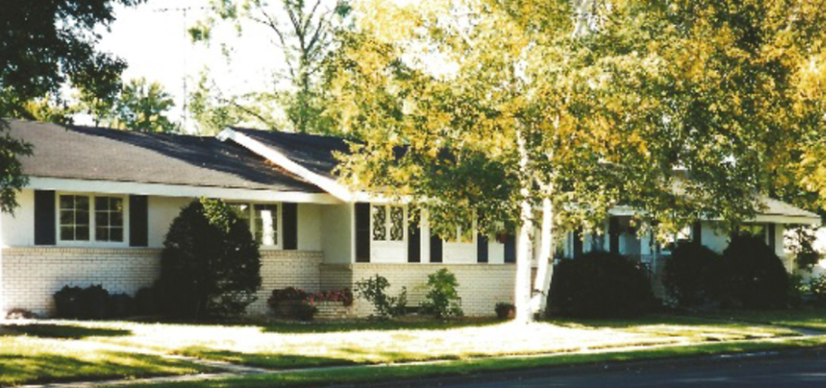
In 1986 St. Paul’s bought a home for a parsonage in Milaca for $63,000. Pastor Steve and wife Cathy moved into their new home. Also in 1986 the steeple was repaired on the church.
In 1987 two new gas furnaces were installed in the basement of the church. In the summer of 1989 St. Paul’s celebrated their 75th Anniversary.
’86 or ’87 Christmas memory:
Chad, Trisha and Travis Calander (Baptized as a baby by Pastor Sutterer) Pastor Sutterer left us in 1988, and a letter from him will be read later to update us about him.
Also that year the LWML did an extensive remodeling of the kitchen, installing an island cabinet and other features to meet codes.
Pastor Dean Stolz from Ogilvie was vacancy pastor for three months.
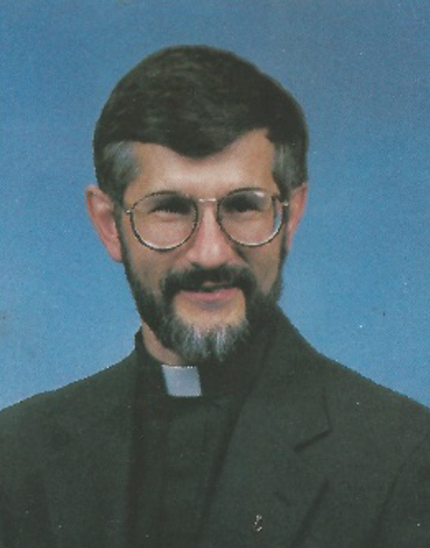
In October 1988 Rev. Richard Hans was installed. He had been an assistant pastor in South Dakota after graduating from the seminary. He and wife Dort (Dorothy) moved into the parsonage. In April 1989 Pastor Hans married Jim & Chris Hill.
1990-2002
At the Voter’s Meeting of Oct. 16, 1994, an offer to donate five acres of land to St. Paul’s congregation for a future building site was given by Vern & June Koch. This offer was accepted unanimously. A few years and many discussions later, the decision to move was made, based on the present site not having enough room for parking, not being handicapped accessible, and the present building needing more upkeep. Not long after, a long range planning committee was established. Much prayer and discussion was done, with the final result to build, rather than try to move the present church and put on an addition. A fund raiser and dinner was held at the St. Mary’s Catholic Church as a first step.
At this time, Pastor Hans decided to accept an offer at the LCMS MN North District in Brainerd. After a call for a new pastor, we accepted Pastor Vernon Dorn, who was installed on Aug. 30, 1998. He and wife, Wanda and son, Matthew, moved into the parsonage.
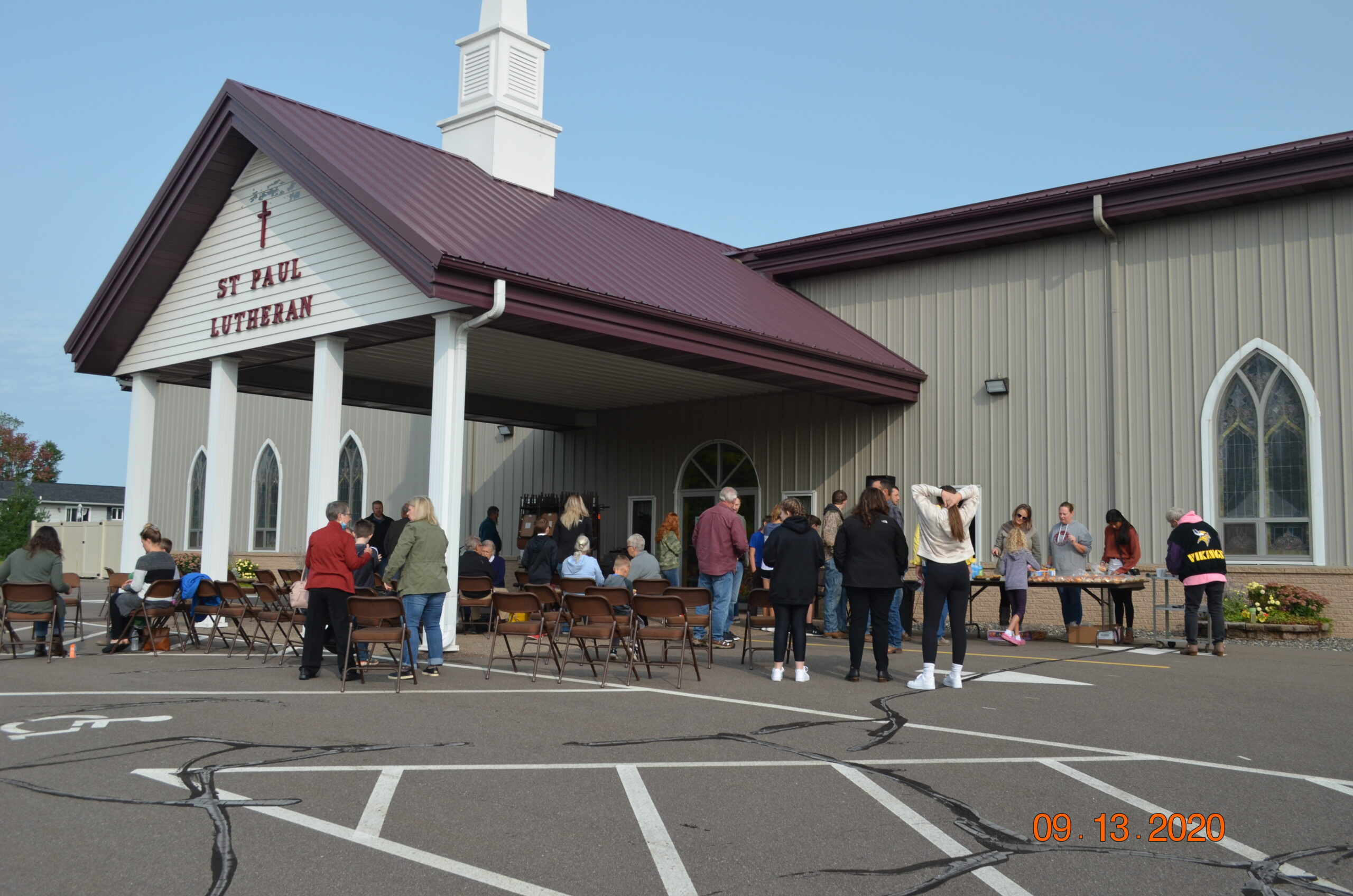
In May, 2001 the Ground-breaking ceremony was held in a drenching rain and about 50 members were there. The committees were established to handle all aspects from financing to preparing the land, deciding what type of building and finding someone to coordinate it all – which became Wayne Bekius’ responsibility. As these plans were going on, the life of St. Paul’s Church also continued. VBS was a great hit that summer, with a western theme. A decision had been made to remove the stained glass windows and store them at the Harris Place until they could be installed in the new church. This in itself was a big project, securing them and moving them, as well as replacing the opening of each with much smaller windows. The new building committee concluded that a pole-type building would be the most economical and the Morton Builders out of Monticello were contracted. Roger & Jeff Rahm were hired for the excavating and they donated much of their labor. The road was put in, the pole holes made and construction began the beginning of July, 2001.
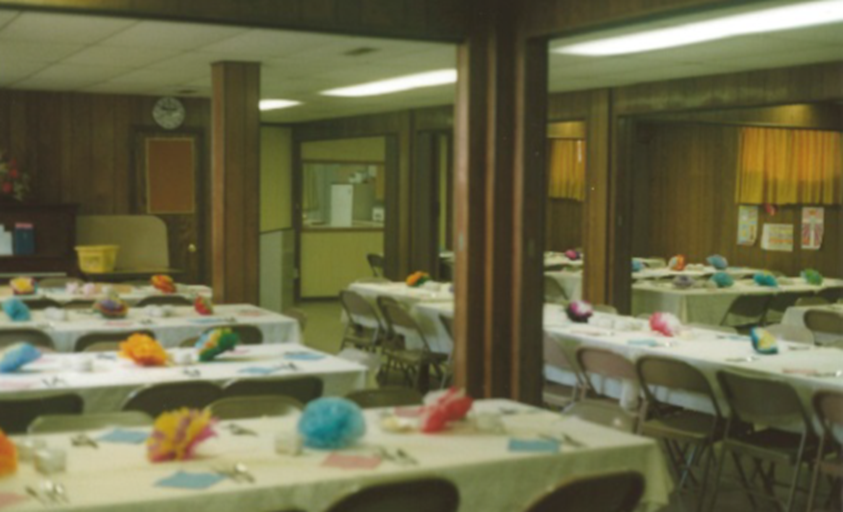
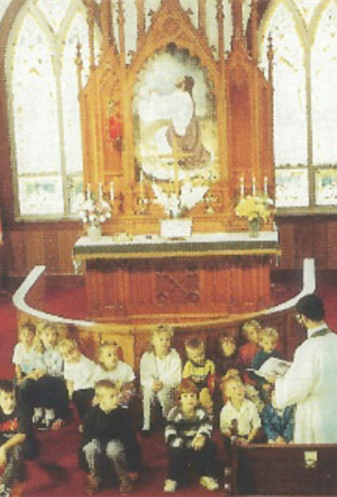
Following are the last events held in the “old” church: Stew Supper; Christmas services and Children’s program are featured in these pictures, note the small windows that replaced the stained glass ones. Work by volunteers in the new building and contractors outside The last events in the old church and moving pews & piano & organ From the groundbreaking on May 20th, 2001 through exactly a year, construction was done with many hard workers, hired contractors and volunteer members alike.
A Dedication Service was held with former Pastors Blaske and Hans participating. A procession of cross, flags and banners was held also. A Business Men’s Dinner was done to thank the many businesses than helped build this new church, and a special thank you to Wayne. An Open House to celebrate was held with a special musical group performing.
2003-2010's