

Tenth Sunday after Pentecost
Matthew 14:13-21
August 2, 2026
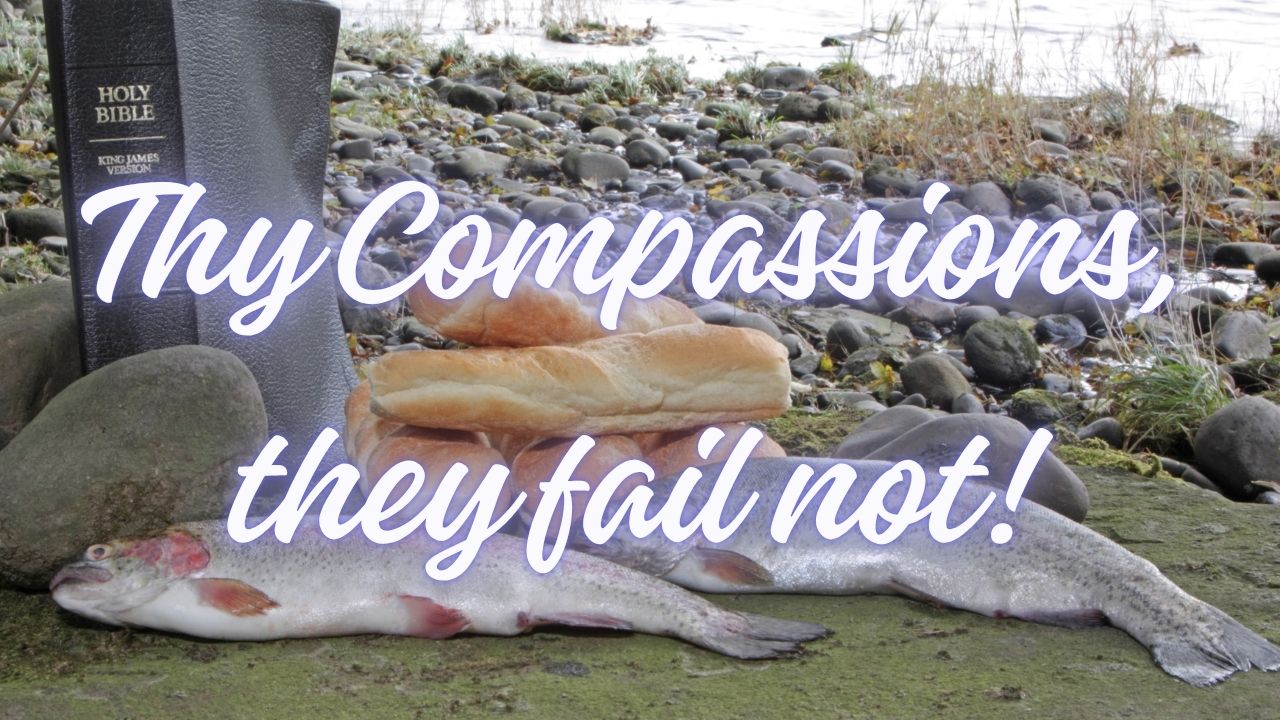
From parables to miracles. And the most famous of miracles, next to raising Lazarus from the dead, is probably the feeding of the 5,000. It seems to be more impressive than the other feeding of the multitude which comes a chapter or so later, but only because it’s the first feeding.
This is a miracle where the more liberal churches of the world will even question that it happened, and your more conservative churches like we at St. Paul’s, will find it hard to preach on because it is such a rich text; I’d be here all day if I were to preach on everything Matthew intends to teach by this event.
But I can say a few things about the text that are worthy of your time and understanding. First, our Lord did not perform these great miracles and signs for no reason at all. He did them to teach the faith. Second, Matthew did not include this particular miracle story in his Gospel just to jot down history. He included it to teach the faith, some aspect or angle of the faith worth knowing and understanding.
But let’s consider what led to the miracle. John the Baptist had just been martyred. Yes, he stood against Herod and his illegitimate marriage, called him out on it, and for it was thrown in prison and ultimately beheaded. Jesus, who loved His cousin, went to spend time in private prayer, and it seems as though the disciples care a little about Jesus’ pain, so they want to send the crowds away so that they and Jesus can have more time undistracted from the world’s problems.
Yet, even amidst His pain, Jesus shows compassion. He says, “no, these people have been following us around for days, and we have to feed them, so you go give them something to eat.” Jesus, of course, knows that this multitude of hungry people will up and walk away a day later on account of His teaching, and He knows that the disciples have only a few fish and few loaves of bread – obviously that was meant to be their food for the night. But perfect compassion is not pragmatic’s brother. Compassion is not practical.
“You give them something to eat,” says Jesus to 12 confused, tired, grumpy disciples who wanted to send them all home or to the local fast-food joints so they could get some rest.
Jesus’ heart breaks for these hungry people, in part because of their grumbling tummies, but more importantly because of their empty souls, their dried-up spirits. Jesus didn’t come to feed people manna or quail but to feed people with the food of heaven, the food of forgiveness, life, and salvation, and He desires that all people should receive it, and to receive it only by faith.
See, the pharisees and religious leaders at the time, they built many and great roadblocks between salvation and the people. They required the people to follow steep and often confusing laws and commands that had nothing to do with the commandments. Jesus may have suffered on account of John’s death; the disciples may have been tired from all that walking and assisting the Lord as He preached, but the multitude suffered the aches and pains of sin and Satan, and the insufferable world around them.
Jesus’ own pain did not subdue His compassion, His reason for coming.
What roadblocks, what walls, what fortifications do we build between us and the multitude which, like the disciples, leads us to say, “Send them away to fend for themselves”?
Perhaps one of the biggest “send them away” things we do is when we insist there be “No religion, no Jesus at the dinner table.” Or another way of putting it, we flip the God light off once we leave the church property and don’t mention Him again until we flip it back on next time we’re at church.
We’re too busy, too distracted, too preoccupied with our own stuff and we just don’t have time or energy to spend on Jesus talk during the week. And sadly, there is truth to this. We ARE too busy; we ARE too distracted; we ARE too preoccupied with our own stuff, so much so that we DON’T have time to spend on Jesus talk during the week.
Chalk it up to worry, to fear, to uncertainty of the future or, let’s call it what it is, idolatry, we allow the gods of this life and the gods of our own making to force us to shut up during the week and spend our time conversing on worldly things rather than the things of life and salvation.
“Send them away, we got our own problems” we say as we spend our days rummaging through schedules and life-logistics, damaging our health and our souls because we don’t know how to unbusy our lives and fill them instead with heaven’s treasures. “Send them away…send the Jesus stuff away…there’s just no room on the schedule; no room for Him at the dinner table.”
Oh, we say our prayers… “Come Lord Jesus be our guest and let these gifts to us be blessed, Amen,” saying it as quickly as we can so we can get to that bread and fish, or that 5-course Michelin Star spread on the table. Might as well not pray at all.
Or while at church, we have our eyes focused on the clock, testing the pastor’s sermon length, cutting short hymns and taking parts of the liturgy out, “So we can get done in about an hour; we have things to do and places to go, gotta get moving, gotta get moving,” and I do it too. Doesn’t make it right.
We’ve put the Christian faith on a stopwatch, and like the disciples, when we’re too distracted or busy or tired – and it seems like we always are, we want to put it away, shut it off, flip the switch when the buzzer sounds so that Jesus doesn’t distract from our days and priorities, from our lives and plans.
And by the way, this is the same crowd, the same 5,000 along with women and children who, a day later, as we read in John 6, went looking for Jesus and wanting more bread and fish, to which Jesus preached and told them to seek lasting food, His flesh and blood given for the life of the world, and then walked away from Him because His teaching was too hard to understand.
Do we walk away from Jesus when His teaching is too hard to understand? Are we satisfied with the food that fills the stomach but turned off by the food that fills the soul to eternal life? Are we sometimes like the disciples, pushing the multitude away on account of our own idols, and then sometimes like the crowd, walking away because we aren’t being fed in the way we want?
Yes. And it’s the whole point. But more importantly is the fact that the Lord NEVER pushes us away; He NEVER builds a wall or roadblock in our path. Even if the Lord should be sick and tired of us for our faithlessness, His compassion never fails us, and His love for us never ceases.
Looking back, Jesus saw John’s death; looking forward, He perceived His own death on the cross. He also foresaw His disciples’ gruesome deaths which would come years later. Death was all around Him, and yet His compassion for multitudes did not waver.
We are not the perfect disciples, not by a longshot, but Jesus’ compassion remains. Those to whom we are sent, the multitudes of sinners in the world to whom the Lord sends us to love and serve and feed with His Word, they are far from perfect candidates to the Christian faith, and yet the Lord has compassion on them.
See, there’s the thing. Love and compassion and mercy and grace – this is God’s business. Faithfulness to God, faithfulness to sound doctrine is not an enemy of love and compassion; they go hand in hand, in fact. See, Jesus didn’t change the message, He didn’t change the timeless Word in order to exhibit compassion. And in fact, He preached the truth all the more and with boldness, and what He preached offended lots of people, but He was no less compassionate or full of love and mercy for doing it. “Lord, to whom shall we go? YOU have the words of eternal life,” right?
The most compassionate thing our Lord does for us isn’t stuffing our faces with food; the most compassionate thing our Lord does for us is feed us the food of heaven, the unfettered, unfiltered, unchanging Word of God which brings life and salvation and forgiveness of sins. And the most compassionate thing we can do for the neighbor is speak the same Word of God without filter or fetter getting in the way.
And the greatest voice and word of compassion we can share with the neighbor is how the unchanging, timeless, eternal Word became flesh and made His dwelling among us so that His glory be revealed in the shedding of His blood whereby death is defeated and the kingdom of life reigns supreme.
Yes, we are the “send them away” disciples at times, and yes, we are the “your teaching is too hard to understand” multitude at times. We change and we shift and we bend and we buckle, but Jesus never changes, His Word never changes. And thanks be to God that His Word brings with it everything we need to live, to flourish, and to be full, the wisdom and knowledge of the ages all wrapped up in Jesus. Amen.